

BDSM is more common than most people think.
Studies show a clear gap: many people fantasize about dominance, submission, bondage or erotic pain — but far fewer actually practice it in real life.
That gap matters. It explains why so many people are curious, but hesitate. They read, imagine, search for numbers — and still do not know how to take the first safe step.
• A nationally representative study from Belgium found that 46.8% had tried at least one BDSM practice. Another 22% had only fantasies. 8% were not interested at all. Source: The Journal of Sexual Medicine, No. 9, pp. 1152–1159, Oxford University Press.
• BDSM statistics from Australia: in a large, representative survey, around 2% of men and just over 1% of women reported practicing BDSM-related activities in the past year. Compared to the Belgian findings, this is a major gap. Source: Australian Study of Health and Relationships (n≈19,307); Richters et al., The Journal of Sexual Medicine (2008).
• BDSM statistics from Canada: one population study found that roughly 62% have BDSM-related fantasies. 64.6% of women and 53.3% of men fantasized about being dominated; 46.7% of women and 59.6% of men fantasized about dominating. Source: Joyal & Carpentier, The Journal of Sexual Medicine (2015).
• BDSM statistics worldwide: in a 41-country consumer survey, about 20% had used masks, blindfolds, or bondage gear; 19% reported spanking; 22% blindfolds/handcuffs; and 5% explicitly identified as sadomasochistic. Source: Durex Global Sex Survey (2005)
Curious is not the same as experienced.
If you want to turn BDSM curiosity into safe, practical ideas, start with 200 Ideas for BDSM Sessions.
How are male Doms and Femdoms distributed statistically?
Across multiple recent BDSM stats and studies, clear role patterns repeat: women identify much more often as submissive, men far more often as dominant. Percentages vary somewhat, but the direction is stable.
• Wismeijer & van Assen (2013): only a small share of women labeled themselves as dominant (about 8%), while a clear majority identified as submissive (≈ 75%). Source: Wismeijer & van Assen, 2013, The Journal of Sexual Medicine.
• Hébert & Weaver (2014): similar findings; about 9% of women reported dominance, around 88% reported submissiveness. Source: Hébert & Weaver, 2014 (peer-reviewed study; cited in the Wikipedia entry “BDSM”).
• Weierstall & Giebel (2017): higher dominance levels among men; women at about 19% dominant and 74% submissive. Source: Weierstall & Giebel, 2017 (cited in the “BDSM” Wikipedia article).
Additional research points to women, on average, preferring dominant male partners. Comparing sexual fantasies, women more often report submissive/passive scenarios, sometimes including coercion elements as fantasy content.
Important: these BDSM statistics describe averages and fantasies, not individual desires. Fantasies about coercion are not an endorsement of non-consensual acts. Real BDSM is practiced with explicit consent, boundaries, and safety.
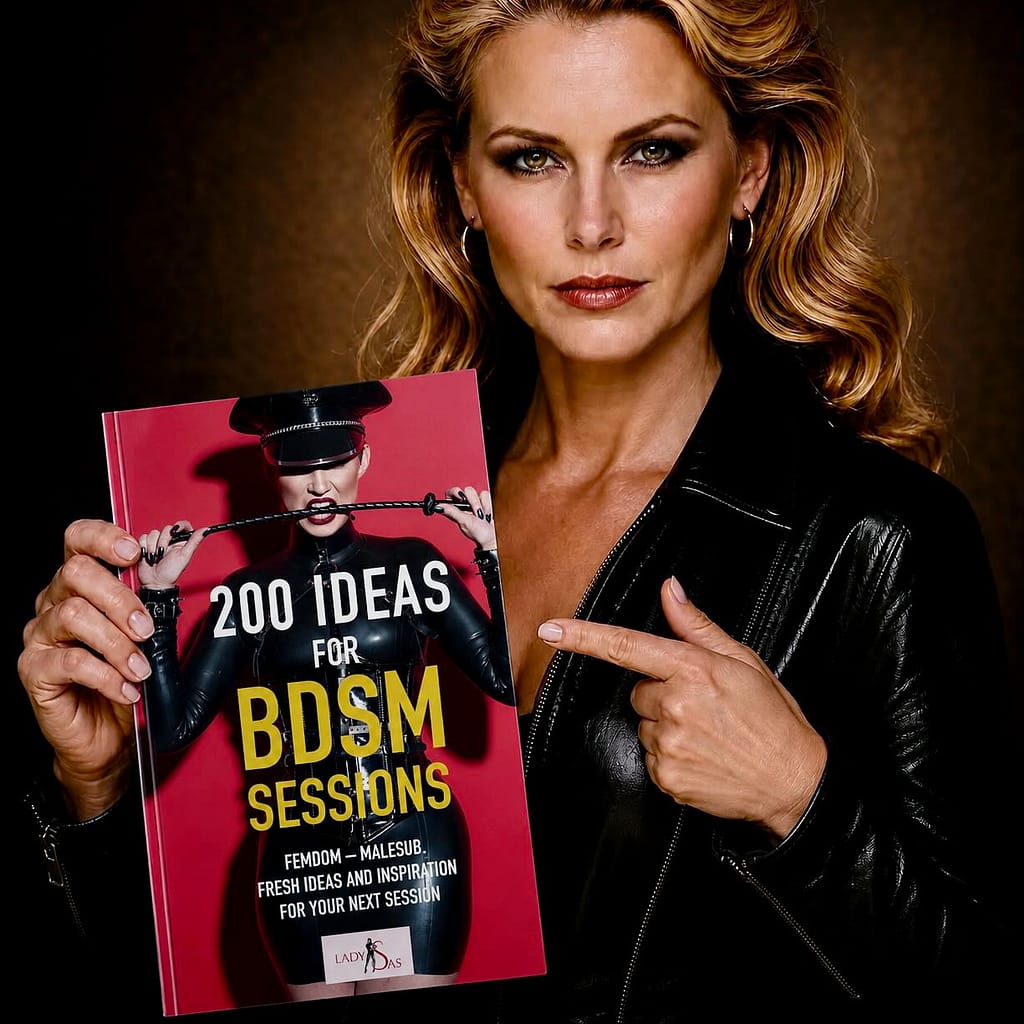
Our #1 Bestseller:
Curious about BDSM? Start safely with real ideas.
The studies show how common BDSM fantasies are. This book helps you take the next step: practical, safe and inspiring session ideas for beginners and couples.
❤️ Practical, safe, and proven
Rated ⭐️⭐️⭐️⭐️ 4.2 out of 5 stars on Amazon (165 global ratings).
Other readers also liked:

Explore Femdom and BDSM

Let the Mistress keep you chaste
Start a female-led relationship
The women behind Lady-Sas.com

Lady-Sas.com is one of the most well-known platforms for femdom and BDSM. The website is run by Lady Sas and Lady Victoria, two private femdoms from Frankfurt am Main. Since 2013, we have been publishing interviews, guides, books, and audiobooks on female dominance, FLR, chastity, cuckolding, and BDSM.
Our mission is to educate and break down prejudices. We support women and men in confidently and safely exploring their dominant or submissive sides.
Lady-Sas.com is a place for knowledge, inspiration, and personal growth.
→ New here? Start with our Femdom Guide, our BDSM Guide and visit the Lady Sas Femdom Library.
FAQs
How common is BDSM according to current studies?
Most surveys show a high rate of fantasies and a smaller, but significant, rate of real practice. Depending on the country, between 2% and nearly 50% have actively tried BDSM, while more than half report power-exchange fantasies.
What explains the huge differences in BDSM statistics between countries?
Definitions and survey methods vary. Some studies include light bondage or blindfolds, while others only count explicit SM. Cultural attitudes and willingness to disclose kink also impact the numbers.
Do more people fantasize about BDSM than actually practice it?
Yes. Fantasies are widely reported, but only a portion translates into real sessions. Safety concerns, lack of partners, stigma and inexperience often create a gap between imagination and practice.
Why do women statistically report submissive fantasies more often?
Across multiple studies, women show a consistent preference for passive or submissive roles in fantasy settings. This reflects cultural patterns, erotic imprinting and the appeal of surrender without real-life consequences.
Are men predominantly dominant in BDSM statistics?
Yes, most data confirms that men identify more often as dominant. However, a significant minority lean submissive, and the number of male subs appears to be rising in newer surveys.
Is it normal to enjoy power exchange fantasies without practicing them?
Absolutely. Many people enjoy psychological dominance or submission only in fantasy form. This is common and not an indicator that someone must act it out in real life.
Do BDSM statistics reflect individual desires accurately?
No. They show averages, not personal identity. A study can describe a general pattern, but not your unique preferences or limits.
Why do some people turn BDSM curiosity into real-life practice?
Common motivations include trust, exploration, stress release, emotional intensity and erotic novelty. When partners align in consent and communication, curiosity becomes experience.
What percentage of people identify as sadomasochistic worldwide?
In global surveys, about 5% openly self-identify as sadomasochistic, while many more engage in BDSM activities without using that label.
Are coercion fantasies a sign of unsafe desires?
No. They are fantasy content, not real-life intention. Real BDSM requires consent, safety protocols, safewords and emotional aftercare. Fantasy and practice are not the same thing.
Do BDSM statistics show a trend toward more openness?
Yes. Younger generations disclose kink more freely, and global acceptance has grown. Digital culture, education and visibility reduce stigma and increase comfort in naming desires.
Does BDSM require formal training or experience?
Not at the start, but learning improves communication, safety and confidence. Guides, consent frameworks and basic technique knowledge help turn curiosity into responsible play.
